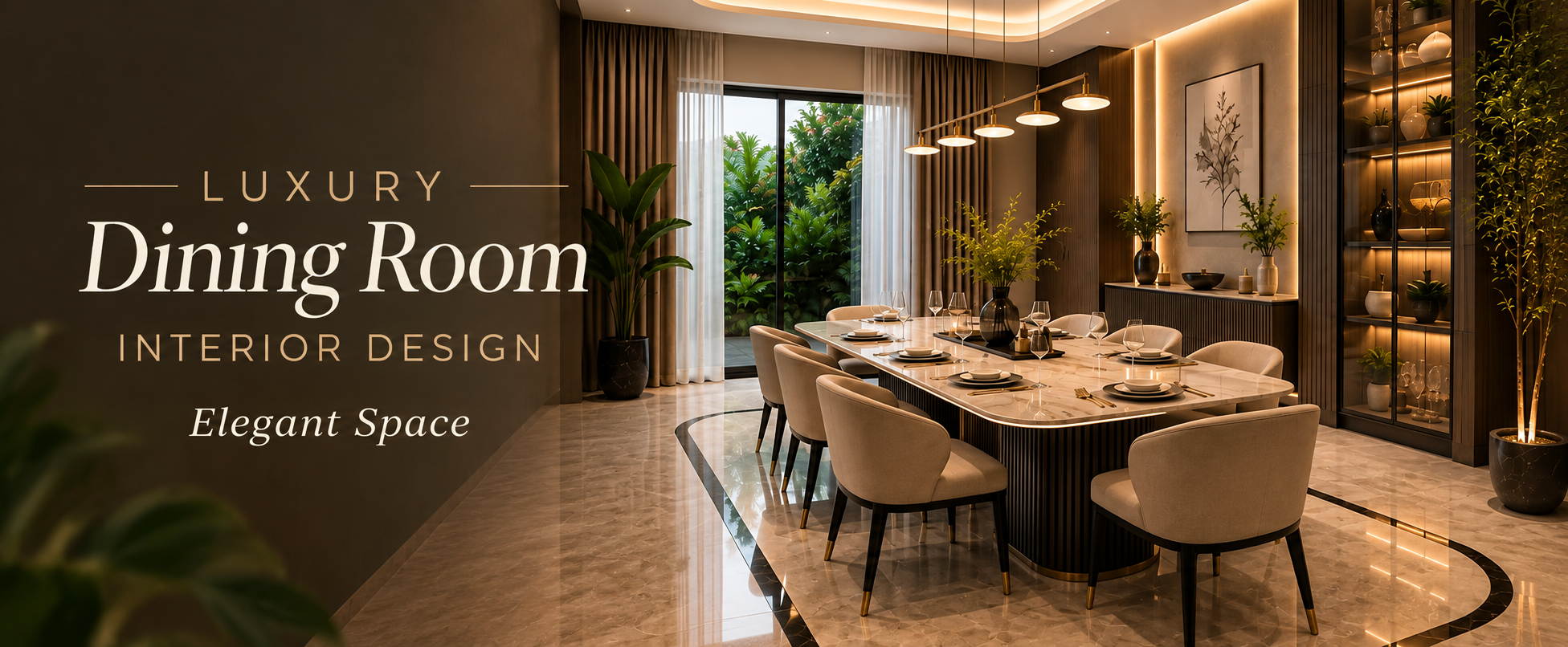
Luxury Dining Room Interior Design: Elegant Space
Sixty-eight percent of Houzz users browsing dining room photos filter for "modern" or "contemporary" styles, yet the most saved images almost always feature warm, layered textures over stark minimalism. Luxury dining room interior design is the art of resolving that exact tension. It blends the clean lines of modern architecture with deep comfort, rich materials, and precise lighting so a room feels equally suited to a Tuesday night or a grand holiday feast. According to Veranda, modern families tend to take a casual approach to daily meals, making the dedicated dining room a space reserved for special occasions—and therefore one that deserves a higher level of design intent.
What Defines Luxury Dining Room Interior Design?
Luxury dining room interior design is defined by the deliberate curation of high-end materials, spatial harmony, and comfort. It rejects the idea that formality means stiffness, opting instead for spaces that invite long, lingering dinners.
The Balance Between Elegance and Welcoming Comfort
True luxury doesn't shout. It whispers. When House Beautiful tours designer dining spaces, the recurring theme isn't opulent gilding but livable elegance. A room can feature a hand-carved marble table and still feel approachable if the seating is pitched for long conversations and the acoustics are soft. You achieve this balance by contrasting hard, reflective surfaces—think polished stone, crystal, or gilt bronze—with deep, tactile textiles. Velvet chairs, heavily textured rugs, and sweeping curtains absorb sound and invite touch. The room should look highly intentional but never feel like a museum roped off from daily life.
Key Elements of High-End Dining Spaces
According to the 2026 design portfolio reviews from Boca do Lobo, luxury dining spaces are the epicenters of fine living, not merely places to share meals. They cite architectural grandeur, sculptural furniture, and statement lighting as the defining triumvirate of high-end spaces. If you strip away those elements, a dining room is just a table in an empty box. Studio Deco Arte approaches luxury dining room interior design by anchoring the space with an architectural focal point—often a bespoke sideboard, a paneled wall, or a striking piece of art—and building the table setting outward from there.
How Do You Plan Modern Luxury Dining Room Interior Design?
Modern luxury dining room interior design requires strict spatial planning before any furniture is purchased. You start with a cohesive color palette and a clear understanding of material weights, ensuring the room doesn't become visually cluttered.
Establishing a Cohesive Color Palette
Skip the stark white boxes. Modern luxury favors complex, grounded palettes. Deep jewel tones—emerald greens, peacock blues, and rich burgundies—anchor a room and create an instant sense of intimacy. If you prefer a lighter aesthetic, use layered neutrals like oyster gray, warm beige, and soft cream. The trick is to restrict the primary palette to two or three colors and introduce a single contrasting metal for hardware and lighting. A room grounded in deep blue with polished brass accents feels deliberate and curated.
Selecting Premium Materials and Textures
Material selection dictates how a room ages. According to a Houzz design trend analysis, marble tabletops paired with velvet seating remain a top-requested combination for upscale dining spaces. The material contrast is what makes the room work. You want the cool, dense feel of a marble or quartzite tabletop offset by the warmth of carved walnut legs or a brushed bronze base. Avoid matching every surface. When the rug, table, and chairs all share the exact same finish, the room falls flat. Mix a smooth stone top with a heavily textured bouclé or a sleek lacquered wood with a sheer linen.
How to Choose the Right Furniture for Luxury Dining Room Design for Modern Homes?
Furniture selection for luxury dining room design for modern homes hinges on exact scaling and statement seating. Oversized tables in compact rooms ruin the architectural flow, while undersized chairs make a grand table look cheap.
Scaling the Dining Table to the Room
A common mistake is buying the largest table a room can physically hold. Don't do it. You need a minimum of 36 inches of clearance between the table edge and the wall or surrounding furniture to pull out a chair comfortably. If you have a 12-by-14-foot room, a table that seats eight should not exceed 96 inches in length. The proportions of the table itself matter just as much. A thick, chunky table base works in a massive, double-height room, but it will overwhelm a standard 10-foot ceiling. Opt for a sleeker, architectural base or a central pedestal if you need to maximize floor space.
Investing in Statement Seating
According to Veranda's review of designer dining spaces, klismos chairs—like those from Saridis of Athens—remain a favorite among interior decorators for their sculptural silhouette and historical weight. Statement seating transforms the dining table from a utilitarian surface into an artful composition. Consider mixing upholstered armchairs at the heads of the table with side chairs along the length. This breaks up the visual rhythm and creates a more dynamic, welcoming arrangement. Upholster the head chairs in a contrasting textile, perhaps a rich leather or a bold patterned silk, to draw the eye and establish the room's focal point.
Why is Lighting Critical in a Luxury Dining Room?
Lighting is the most critical element in a luxury dining room because it dictates the mood, flatters the occupants, and highlights the architecture. Without layered lighting, a room filled with expensive furniture looks one-dimensional and cold.
Layering Ambient, Task, and Accent Lighting
A single chandelier over a table is never enough. You need three layers. Ambient lighting sets the overall brightness and ensures the room isn't a cave when the sun sets. Task lighting is highly specific, like a dimmable pendant over the table that allows you to read a menu or see your guests clearly. Accent lighting washes the walls, highlights art, or grazes textured stone. By placing these layers on separate dimmer switches, you can transition from a bright workspace for setting up a dinner party to a soft, glowing environment for the main course.
Choosing Sculptural Chandeliers and Pendants
The fixture over the table should act as a piece of jewelry. A 2026 design tour by BEE Design highlighted how sleek, modern minimalist pendants paired with opulent gold accents create striking high-end combinations. The fixture should be visually heavy enough to anchor the table but not so heavy it obstructs sightlines. A standard rule is to hang the bottom of the chandelier 30 to 34 inches above the tabletop for an 8-foot ceiling. Add 3 inches for each additional foot of ceiling height. Sizing the chandelier diameter to about half the width of the dining table keeps the proportions grounded and prevents the fixture from overwhelming the room.
How Can Decor and Artwork Elevate the Space?
Decor and artwork elevate a dining room by introducing personal narrative and softening hard architectural lines. Artwork anchors the walls, while textiles manage the acoustics and temperature of the room.
Curating Wall Art and Mirrors
A blank wall is a missed opportunity. Large-scale art brings scale and color to the room, filling the vertical space that furniture alone cannot reach. When selecting art for a dining room, lean into pieces that provoke conversation. Avoid generic, mass-produced prints. If you have a smaller room, a large convex mirror opposite a window will bounce light around and visually double the space. According to House Beautiful, designers frequently use mirrors to make small dining spaces feel expansive while adding a touch of traditional glamour.
Using Textiles to Add Warmth and Acoustic Softness
Dining rooms are inherently echo-prone. Large hard surfaces—the table, the floor, the walls—bounce sound around. Textiles are the fix. A heavy wool rug under the table not only grounds the furniture but absorbs ambient noise. Drapes framing the windows do the same. Extending the rug at least 24 inches beyond the table edges on all sides keeps the chairs on the rug even when pulled out. This prevents the room from feeling hollow and amplifies the sense of warmth and acoustic comfort.
When Should You Hire a Luxury Dining Room Interior Designer in Delhi?
You should hire a luxury dining room interior designer in Delhi when you want to integrate custom local craftsmanship without compromising on spatial proportion or material quality. Professional intervention ensures the room meets modern acoustics and lighting standards.
Navigating Local Sourcing and Craftsmanship
Delhi has a deep bench of generational artisans specializing in brass inlay, stone carving, and hand-knotted textiles. A local designer knows exactly which workshops can execute a custom marble table with precise book-matched veining, or which metalworkers can fabricate a bespoke bronze console. Sourcing locally also allows for rigorous quality control. You see the raw materials, sit in the prototype chairs, and adjust the finishes before the final piece is built. This direct oversight is impossible when importing mass-produced furniture from catalogs.
Customizing Designs to Match Your Home's Architecture
A dining room cannot be designed in a vacuum. It must relate to the adjacent kitchen, the hallways, and the architectural language of the home. A luxury dining room interior designer in Delhi assesses the flow of natural light, the ceiling heights, and the structural details of the house to ensure the dining space feels like a natural extension of the property. Studio Deco Arte specializes in this contextual approach, treating the dining room not as a standalone showroom but as a living, breathing intersection of your home. Customizing the design to your specific architecture guarantees a cohesive result rather than a forced aesthetic.
What Are the Final Touches in Luxury Dining Room Interior Design?
Final touches in luxury dining room interior design are the functional and aesthetic details that complete the room. This includes the specific tablescaping and the discreet integration of modern technology.
Tablescaping and Centerpiece Styling
A luxury table is never bare. Tablescaping is the art of dressing the table for everyday elegance, not just holidays. Start with a base layer—linen napkins, fine bone china, and weighted flatware. Add a centerpiece that doesn't block sightlines. A low arrangement of fresh flowers or a sculptural bowl filled with seasonal fruit works well. The goal is to make the table feel intentional and abundant without being cluttered. A long, low floral runner down the center of the table works well for large gatherings, ensuring guests can make eye contact across the table without ducking around a massive vase.
Integrating Smart Home Technology Discreetly
Modern luxury demands seamless functionality. Technology should be invisible but highly effective. Hidden dimmable LED strips in coves or under the sideboard allow for one-touch scene setting. Motorized window shades that lower the blackout blinds at sunset and adjust the lighting simultaneously are standard in high-end homes. Keep the tech strictly concealed. There is no place for visible thermostats or bulky speaker systems in a beautifully detailed dining room.
Key Takeaways
- Balance hard, reflective materials like marble with soft textiles to create a welcoming, acoustically comfortable dining space.
- Maintain at least 36 inches of clearance around the dining table and scale the chandelier to half the table's width.
- Layer ambient, task, and accent lighting on separate dimmers to transition smoothly from setup to dining.
- Hire a local designer to leverage Delhi's bespoke craftsmanship and ensure the room aligns with your home's architecture.
Comparison
| Design Element | Key Consideration | Recommended Approach |
|---|---|---|
| Color Palette | Avoid stark white; create intimacy | Use 2-3 deep jewel tones or layered neutrals with one contrasting metal |
| Furniture Scaling | Maintain 36 inches of clearance | Match table proportions to ceiling height; use central pedestals for tight spaces |
| Lighting Layers | Control mood and highlight architecture | Layer ambient, task, and accent lighting on separate dimmer switches |
| Textiles & Acoustics | Soften hard, echo-prone surfaces | Use heavy wool rugs extending 24 inches beyond the table and draped curtains |
| Local Sourcing | Integrate custom craftsmanship | Partner with a designer to access Delhi's generational artisans for bespoke pieces |
Frequently Asked Questions
What is the best color palette for a luxury dining room?
The best color palette balances deep, grounding tones with a single contrasting accent. Deep jewel tones like emerald green or peacock blue create instant intimacy, while layered neutrals like oyster gray and warm beige offer a light feel. Restrict the palette to two or three primary colors and introduce a contrasting metal for hardware.
How large should a dining room rug be for a luxury interior?
A dining room rug should be large enough to accommodate the table and the chairs, even when they are pulled out for guests to sit. You need a minimum of 24 inches of clearance beyond the table edges on all sides. For a standard 8-person table, a 9-by-12-foot rug is usually the minimum acceptable size.
What type of lighting works best for luxury dining room interior design?
Layered lighting works best. You need ambient lighting for overall brightness, task lighting—usually a dimmable pendant—over the table, and accent lighting to wash the walls and highlight art. Place each layer on separate dimmer switches to control the mood from dinner prep to dessert.
How do I make my dining room feel more welcoming and elegant?
To make your dining room feel welcoming and elegant, mix hard, polished surfaces with soft, tactile textiles. Use a heavy wool rug to absorb sound, introduce upholstered head chairs at the table, and ensure the lighting is warm and dimmable. Avoid stark, bright overhead lighting in favor of layered, glowing light.
Why should I hire a luxury dining room interior designer in Delhi?
Hiring a luxury dining room interior designer in Delhi gives you direct access to local generational artisans specializing in bespoke craftsmanship. A designer ensures the room integrates flawlessly with your home's architecture while managing local sourcing, acoustics, and custom lighting design without compromising on material quality.