Best Pooja Room Design Ideas for Modern Indian Homes
Best Pooja Room Design Ideas for Modern Indian Homes
A soft bell. A warm lamp. A corner that steadies your day. The right layout turns a few quiet minutes into a ritual that anchors the whole house. Finding practical pooja room design ideas requires blending traditional Vastu principles with contemporary aesthetics to create a serene worship space. Whether you want a compact corner mandir for a small flat or an elegant marble temple for a spacious living room, the right design balances tranquility, functionality, and style.
According to a feature by Architectural Digest India, modern puja rooms are bringing stillness into contemporary homes by moving away from heavy, enclosed spaces and embracing lighter, more integrated architectural elements. Studio Deco Arte approaches this exact shift. We build spaces that breathe.
What Are the Best Pooja Room Design Ideas for Modern Homes?
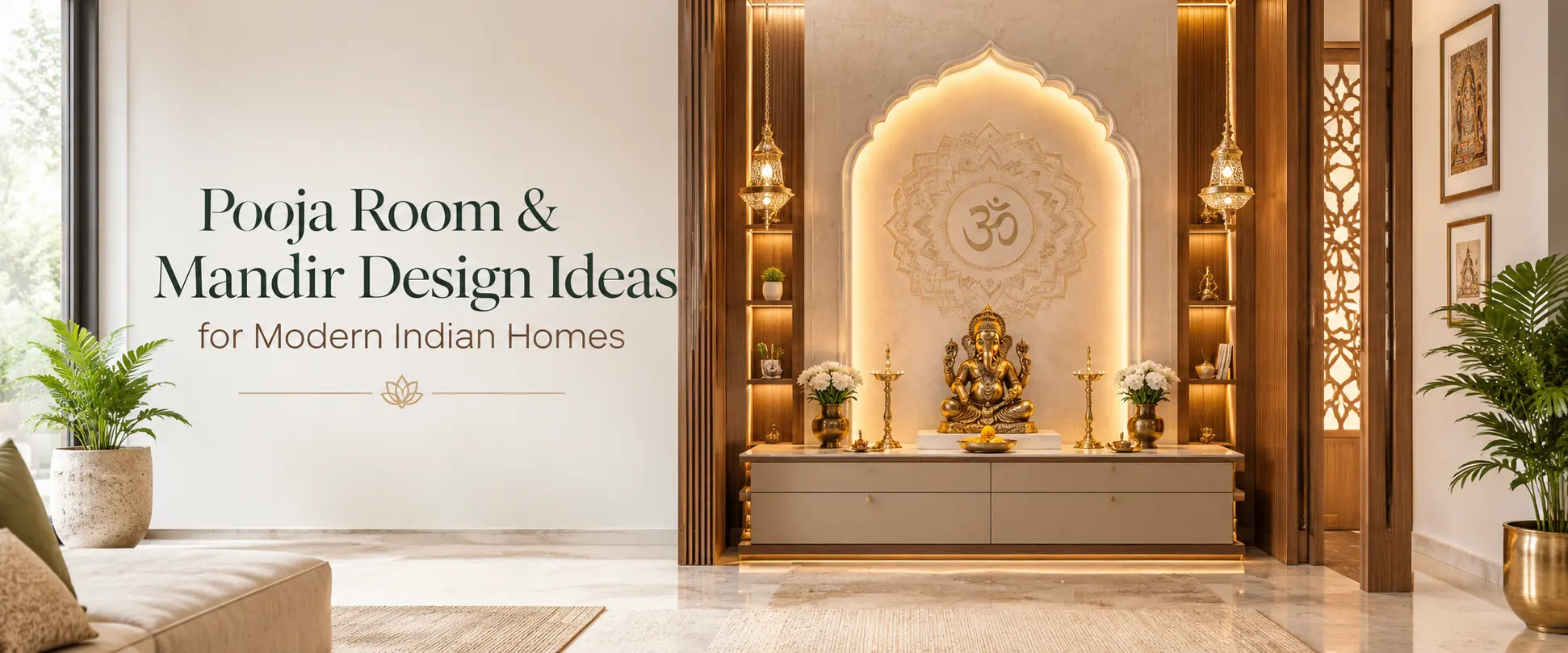
The best pooja room design ideas for modern homes blend sacred geometry with clean, minimalist aesthetics, favoring backlit panels, natural materials, and space-saving layouts over heavily ornate structures. You want a space that feels distinct without shutting the rest of the house out. Modern Indian apartments rarely offer the luxury of a dedicated room. You have to make the mandir work inside your existing footprint.
Blending Traditional Vastu Principles with Contemporary Aesthetics
Traditional Vastu Shastra demands specific orientations—usually the northeast corner—and strict material choices. Contemporary aesthetics lean toward minimalism. You can satisfy both. Use a floating wooden shelf oriented exactly northeast, strip away the heavy carving, and let the natural wood grain speak for itself. A modern mandir design for living room spaces often relies on this exact trick: keep the geometry traditional, but execute it with clean lines.
Choosing the Right Materials: Wood, Marble, and Brass
Your material palette dictates the mood. Wood brings warmth. Marble offers a cool, quiet permanence. Brass adds the necessary ritualistic gleam. According to interior design platform Interior Company, modern homeowners lean toward floating shelves, laser-cut jaali, brass touches, and marble or stone backdrops because these materials adapt naturally to compact urban footprints. Do not mix too many finishes. Pick one primary material and let the others accent it.
How Do You Choose the Right Pooja Room Design for Home Interiors?
You choose a pooja room design for home interiors by assessing the available square footage, natural light, and the existing decor style of the surrounding space. A mandir should never look like an afterthought dropped into a room. It needs to feel like a deliberate architectural decision.
Assessing Your Available Space and Natural Light
Light matters. A dark corner kills the mood. If you have a small flat, look for a wall that gets morning sun. If no natural light reaches the spot, you must build artificial ambient light into the structure. A pooja room design in small flat layouts succeeds or fails on lighting alone. Measure your circulation space, too. You need enough room to sit cross-legged without banging your elbows on a partition wall.
Matching the Mandir Style with Your Overall Home Decor
If your home features sleek modern interiors, a heavily carved traditional teakwood temple will clash. Match the finishes. A home with matte finishes and neutral tones needs a mandir with the same palette. A home with rich, warm tones can handle a darker wood. Studio Deco Arte handles this exact matching process. You can see how we pair mandirs with existing interiors by viewing our luxury interior design portfolio.
What Makes a Modern Mandir Design for Living Room Spaces Work?
A modern mandir design for living room spaces works by using partitions, backlit panels, and consistent material finishes to create a distinct zone without erecting solid walls. Open-plan layouts dominate modern Indian housing. You cannot just build a brick room inside your living room. You have to zone the space.
Using Backlit Panels and Ambient Lighting for a Serene Glow
Lighting makes a mandir feel sacred. A backlit panel casts a soft, even glow that eliminates harsh shadows. You can use warm white LEDs behind a laser-cut jaali screen or an opaque acrylic sheet with an Om symbol. The light should feel like moonlight, not a surgical lamp.
Incorporating Glass and Wooden Partitions for Open-Plan Layouts
Glass partitions separate the sacred space while keeping the room visually open. A frameless glass enclosure with a wooden base keeps the living room looking large. Alternatively, a half-height wood partition gives just enough privacy. Houzz India highlights that using clever partitions allows you to fold the mandir into dining corners and hallway niches without losing the sense of an open floor plan.
Why Choose a Marble Temple Design for Home Pooja Spaces?
You choose a marble temple design for home pooja spaces because marble offers durability, a cool surface temperature ideal for rituals, and a timeless, pristine aesthetic that elevates any room. Marble does not warp. It does not absorb smells from incense easily if sealed properly. It ages gracefully.
Durability and Timeless Elegance of Makrana Marble
Makrana marble—the same stone used in the Taj Mahal—remains the gold standard for mandirs. It is incredibly dense and does not stain easily. A marble temple design for home use grounds the space. It feels permanent. While wood brings warmth, marble brings stillness. If you want a mandir that looks as solid in twenty years as it does on day one, marble is the best choice.
Carved Marble Mandirs vs. Minimalist Marble Platforms
You have two distinct paths with marble. A fully carved marble mandir looks traditional and grand, fitting perfectly into classical interiors. A minimalist marble platform—just a simple slab with a brass bell hanging above—suits modern, minimalist homes perfectly. I prefer the minimalist platform. It lets the idols take center stage rather than competing with heavy architecture.
How Can You Optimize Pooja Room Design in Small Flat Layouts?
You optimize pooja room design in small flat layouts by utilizing vertical wall space, installing foldable doors, and choosing wall-mounted units that do not consume precious floor area. Space is the most expensive commodity in an Indian flat. You cannot afford to lose a single square foot to a bulky structure.
Wall-Mounted Mandirs and Foldable Door Mechanisms
A wall-mounted mandir floats above the floor. It frees up the space below for seating or storage. Add foldable or sliding doors instead of standard swing doors. Swing doors need clearance. Sliding doors move along a track and take up zero functional space. According to Nerolac, wall-mounted shrines and compact wooden setups work particularly well in urban apartments where floor space and circulation both need protecting.
Utilizing Corner Spaces and Vertical Storage for Pooja Essentials
Corners are dead spaces in most homes. Use them. A corner mandir utilizes two walls, giving you a deeper shelf without protruding into the room. Build vertical storage above or beside the mandir for incense, matches, and spare diya oil. Keep the storage hidden. Clutter ruins the calm of a prayer space.
Which Vastu Shastra Guidelines Should You Follow for Pooja Room Design?
You should follow Vastu Shastra guidelines that dictate placing the mandir in the northeast corner, facing east while praying, and using earthy colors to enhance positive energy. Vastu is not just superstition. It is an ancient system of spatial organization designed to maximize natural light and airflow.
Ideal Directions for Placing the Mandir
The northeast corner—Ishan Kon—is the most auspicious direction for a mandir. It catches the first light of the morning sun. You should face east while praying. If northeast is impossible, north is your second choice. Avoid south-facing placements.
Colors and Materials That Enhance Positive Energy
Vastu favors earthy, calming colors. Think light yellow, soft ochre, mint green, or warm white. Avoid dark, aggressive colors like deep red or black in the pooja space. These colors absorb light and make the space feel heavy. Stick to natural materials. Wood, marble, and brass align perfectly with Vastu principles. You can learn more about our tailored interior solutions by visiting the Studio Deco Arte services page.
What Are the Latest Trends in Pooja Room Decor and Lighting?
The latest trends in pooja room decor and lighting include statement backwalls, intricate jaali screens, and smart lighting solutions that replicate the flicker of a traditional diya. Homeowners want their pooja spaces to feel like a spa—calm, curated, and highly atmospheric.
Statement Backwalls and Jaali Screens
A statement backwall changes everything. Instead of a plain painted wall behind the idols, use a textured stone panel, a wood slat wall, or a laser-cut MDF jaali screen. Jaali screens cast beautiful, dappled shadows when backlit. They add immense architectural value to an otherwise simple shelf.
Smart Lighting Solutions for Diyas and Ambient Glows
Smart lighting lets you control the mood. You can install LED strip lights with dimmers. Some setups even include smart bulbs programmed to mimic the warm, flickering glow of a real diya. This gives the room a traditional feel without the fire hazard of an open flame. For daily design inspiration and updates on modern decor trends, you can follow Studio Deco Arte on Instagram.
Key Takeaways
- Blend traditional Vastu principles with modern aesthetics by using clean lines and natural materials like wood, marble, and brass.
- Optimize small flats with wall-mounted mandirs, sliding doors, and vertical storage to maximize floor space.
- Use glass partitions and backlit panels to integrate a mandir seamlessly into open-plan living rooms.
- Incorporate smart lighting and jaali screens to create a serene, atmospheric glow without fire hazards.
Comparison
| Design Element | Best For | Key Benefit | Space Requirement |
|---|---|---|---|
| Wall-Mounted Mandir | Small flats | Saves floor space | Minimal |
| Marble Platform | Modern minimalist homes | Timeless and durable | Medium |
| Glass Partition Mandir | Open-plan living rooms | Maintains visual openness | Medium |
| Carved Marble Temple | Spacious traditional homes | Grand and ornate aesthetic | Large |
Frequently Asked Questions
Which direction should a pooja room face in a modern home?
The pooja room should ideally face northeast, with the idols placed so you face east while praying. North is the second best direction. Avoid placing the mandir in the south, as it is considered inauspicious according to Vastu Shastra guidelines.
How do I design a pooja space in a small apartment?
To design a pooja space in a small apartment, use wall-mounted mandirs, sliding doors, and corner spaces. Keep the design minimal and rely on vertical storage to keep pooja essentials out of sight. This ensures the room remains uncluttered without losing floor space.
What materials are best for a modern mandir design?
Wood, marble, and brass are the best materials for a modern mandir. Wood brings warmth, marble offers permanence and a cool surface, and brass adds the traditional ritualistic touch. Pick one primary material and let the others accent it to maintain a balanced aesthetic.
Can I place my mandir in the living room?
Yes, you can place your mandir in the living room. Use glass partitions, backlit panels, or half-height walls to zone the mandir area. This approach keeps the living room feeling open while creating a distinct, serene worship zone within an open-plan layout.
What are the latest trends in pooja room lighting?
The latest trends in pooja room lighting include statement backwalls with backlit jaali screens and smart LED strips that mimic the flicker of a diya. These solutions provide a warm, ambient glow that makes the space feel calm, curated, and highly atmospheric.